

The nation we live in today is the result of the hard work and dedication of many great souls. While the freedom fight was undoubtedly a significant milestone, it was equally important to sustain and build the nation after gaining independence. As India transitioned to a democratic republic, many individuals chose to stay involved in central politics, while others returned to their roots and focused on creating a positive impact in their communities.
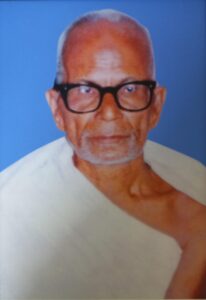
One such great soul who left his mark on society and created a revolution in education in the Mysuru region was Shr. T.S Subbanna, also known as Saravajanika Subbanna. His legacy lives on, and his contributions to education continue to have a profound impact even today. Subbanna’s vision for education was to provide access to quality education to all, regardless of their social or economic background. With this goal in mind, he established a public hostel for students from economically weaker sections of society. This hostel was unique because it brought together students from all faiths and denominations to live and study together.
T.S. Subbanna was a Gandhian, freedom fighter, and social activist who started public hostels and schools (Sarvajanika Sikshana Samsthe) in Mysuru. He was born in 1905 in Taĝaduru village, Nanjangud taluk. His father Eshwarappa was the chief priest at the Ankanatheshwara Temple in Taĝaduru. His mother Parvatamma was a devout and pious lady.
Subbanna had his preliminary schooling at Taĝaduru Government School. Then the family moved to Mysuru for his further education. While in Mysuru, Subbanna worked part-time as a priest. He was admitted to Wesley Mission High School. Venkatakrishnayya was one of the senior teachers who had a profound impact on him. British teachers at Wesley School tried to persuade students like Subbanna to focus on their academics instead of spending time in the freedom movement. But Subbanna had already come under the influence of freedom fighters like M.N. Jois, Sharada Prasad, Agaram Ramayya, Subramanyam and Dasappa. Subbanna and friends convened as the ‘Tilak Sangha’ to share news about freedom fighters nationwide.
Subbanna participated in the Civil Disobedience Movement at Sirsi, Siddapur and Ankola. Subbanna’s mother, in an attempt to distract her son from the freedom struggle, tried to get him married but this went in vain instead Subbanna commits himself to the freedom struggle and his fierce freedom fight shook the Britishers. Interestingly, Subbanna is remembered to have dressed as a woman in a saree to escape being caught, while participating in a protest march passing in front of Hardwicke High School, Mysuru. He managed to give the Police a slip and made it to Subbarayana Kere to hoist the Indian Flag! On another occasion, while being pursued, he ran into a Coal Plant and smeared himself with coal soot and succeeded in evading arrest! Subbanna was among the freedom fighters to hoist the Flag at Shivapura in Maddur. Subbanna was greatly inspired by Gandhian ideals he made his way to Sabarmati Ashram, where he spent time imbibing the Gandhian way of life directly from the Ghandhiji himself!.
In 1930, he returned to Mysuru on the advice of Gandhi and started an initiative to provide shelter to poor and orphaned children, which later came to be known as Sarvajanika Shikshana Samsthe. He established eleven schools and two hostels in and around Mysuru, recognizing the need to educate women and he established dedicated girls’ school and hostel. Many rural poor and orphans found the Sarvajanika hostel to be their home and later achieved great success in their lives, including many well-known writers, bureaucrats, doctors, engineers, and politicians. With his determination and commitment to building the nation, he built an institution and an army of educated and culturally valued citizens.
The king of Mysuru, Jayachamaraja Wadiyar, wanted to honour him with the ‘Samaja Seva’ award. It is interesting to note that he was offered many recognitions and government positions, but he politely declined them all. He solely relied on public donations to build the institute.
Subbanna believed that education was not just about academic excellence but also about inculcating values and virtues that would help students become responsible and empathetic citizens. Subbanna remained committed to his vision of providing education to those who needed it the most. He politely declined admission requests from the affluent class, pointing out that the public resources were meant to nurture the poor souls who had no one else to turn to.
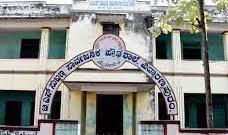
Despite revolutionizing education in the Mysuru region, T.S Subbanna remained steadfast in his commitment to selfless service. He adhered to a simple dress code, wearing only a single piece of dhoti, and prohibited taking his photographs, we hardly find his two photographs. He also fondly referred to his institute as the ‘Sarvajanika Shikshana Samsthe’, which translates to the ‘Public Education Institute’ which was meant for the general public.
Subbanna’s impact on education in the Mysuru region continues to be felt even today, and his legacy serves as an inspiration for those who seek to make a positive impact on society. Even today, the Sarvajanika Shikshana Samsthe runs schools which offer free education and hostels across many rural areas.
He was a great soul who dedicated his life to the betterment of society, and his contributions will always be remembered with gratitude and admiration.